
Commercial apartment building
$3.6 million recovered
Construction delays, excessive change orders, water intrusion, and construction defects
The matter resolved with a $3.6 million recovery after a $0 settlement offer.
Read the case result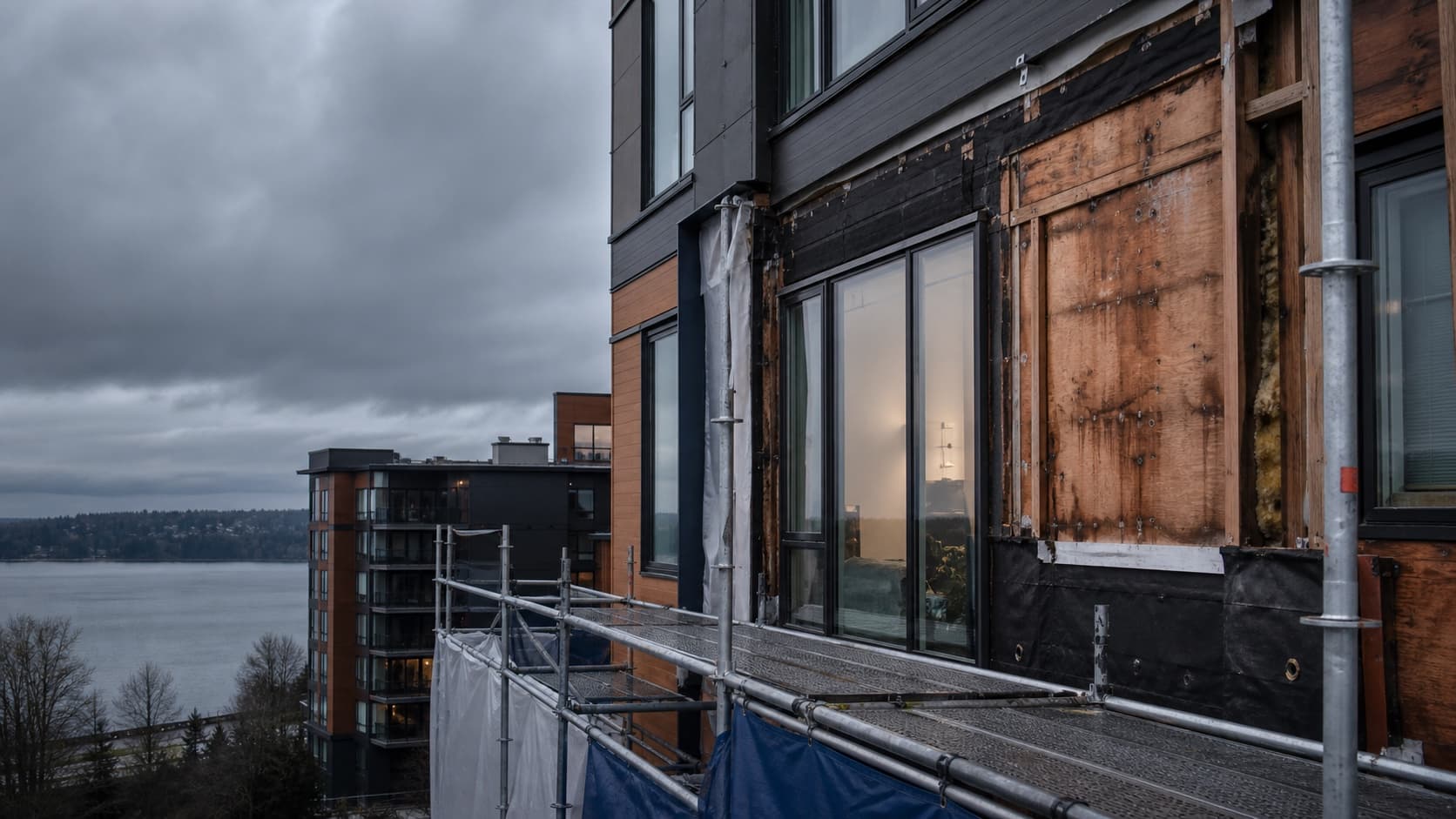
Commercial services
Owner-side counsel for defective work, delay, failed repairs, change-order pressure, and commercial project disputes tied to real asset consequences.
No fee unless money is recovered on accepted matters, subject to a written fee agreement.
Representative results
Commercial apartment building
Construction delays, excessive change orders, water intrusion, and construction defects
The matter resolved with a $3.6 million recovery after a $0 settlement offer.
Read the case resultRepresentative results are examples only. Every matter depends on its own facts, evidence, timing, contracts, policies, parties, defenses, damages, and applicable law. Past results do not guarantee future outcomes.
Water intrusion, envelope failure, roofing, waterproofing, structural movement, or recurring interior damage can turn a localized issue into a broader reconstruction problem.
Turnover delay, remobilization, resequencing, contractor conflict, and occupancy pressure can change the economics of the project long before a claim is formally resolved.
The owner often needs to decide what must be corrected now, what can wait, what evidence must be preserved, and how those decisions affect recovery later.
Scope, notice, disputed extras, allowances, completion obligations, and how the project record frames responsibility.
Photos, expert findings, destructive testing, repair scopes, consultant notes, and what the physical condition suggests about proper correction.
What has to be opened, removed, rebuilt, or staged to complete the work without making the loss worse.
How the dispute affects rent, delivery, occupancy, financing, sale timing, owner capital, or relationships with investors and stakeholders.
Start with a short summary. Prepare these records and provide selected documents when the firm requests them after initial review.
We consider the physical defect alongside tenant, operating, financing, and carrying-cost consequences that shape a practical resolution.
Describe the damage, the response so far, and any upcoming repair, tenant, or project decision. The initial review can identify what further information is needed.